Author: Farshad karimi

  • Fundraising Event

    Fundraising Event

    Wisemans Ferry bowling club is proud to support the  Leukaemia Foundation with a fundraising event on Friday 17th March from 4.00 pm.

    •   Shave For A Cure
    •  Raffles
    •  Chocolate Wheel

    We will also be raising funds to support a young member of our local community is currently fighting this battle.
    Enquiries:
    Vicki Brownless 0423 727 826 

  • WISEMANS FERRY ROAD CLOSURE UPDATE

    WISEMANS FERRY ROAD CLOSURE UPDATE

    WISEMANS FERRY ROAD CLOSURE UPDATE & NEW ARRANGEMENTS FOR SACKVILLE FERRY
    As emergency repair works continue on Wisemans Ferry Road (WFR) between Halcrows Road and O’Briens Road, Cattai, WFR is expected to REOPEN by FRIDAY, 12th AUGUST 2022, weather permitting.

    I know that travel times have been frustratingly longer than anticipated and that congestion at the Sackville Ferry is impacting travel to work and school for local residents, as well as farming and business travel movements.

    With those traffic delays in mind, from TUESDAY, 26th JULY 2022 temporary restrictions will be enforced that will NOT ALLOW HEAVY VEHICLES ACCESS to the SACKVILLE FERRY from 6:00 a.m. to 9:30 a.m. and 3:00 p.m. to 6:00 p.m., MONDAY to FRIDAY.

    Given there has been short notice tonight, Transport for NSW will implement the changes to the PM peak tomorrow, Tuesday.

    Emergency Services vehicles will be exempt from this restriction.

    Heavy vehicles will be required to detour via Old Northern Road.

    Temporary restrictions will be lifted when Wisemans Ferry Road reopens.

    Please keep to speed limits, follow the signs and the traffic controllers’ directions.

    Plan ahead for additional travel time or why not consider postponing non-essential travel.

    Sackville Ferry and Wiseman Ferry Road detours are as follows:-

    • For northbound traffic, light vehicles only can use Halcrows Road and Cattai Ridge Road. All vehicles can use Old Northern Road.
    • For southbound traffic, all vehicles can use Wisemans Ferry Road and Old Northern Road.

    You can call 132 701 for traffic updates or check www.livetraffic.com for up to date detours

  • Anzac Day

    Anzac Day

    ANZAC DAY CEREMONY, MONDAY 25TH APRIL

    DAWN SERVICE:

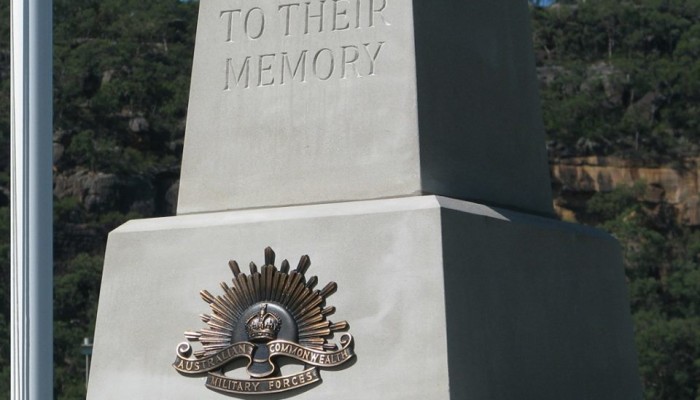
    Supporters are asked to gather at the Cenotaph at 5.15am for a 5.30am start.

    Following the service, supporters are invited to partake in a light “Gunfire Breakfast” at the Bowling Club.

    11AM MARCH AND CEREMONY

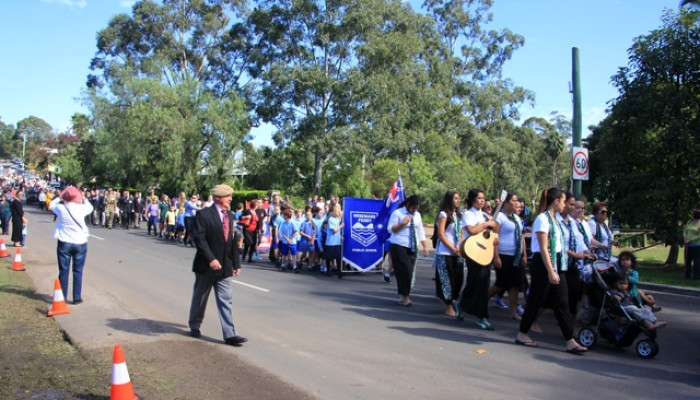
    March form up venue: Front of the Wisemans Ferry Police Station. Supporters are asked to gather/form up at 10.45am for an 11.00am start.

    The March is led by the Pipers, will proceed down the main street for a distance of approximately 300 metres to the ANZAC day Cenotaph situation in the public park.

    Following the Ceremony, refreshments may be obtained from the Bowling Club and the nearby Wisemans Ferry Inn.

    Following the success last year of this wonderful entertaining group, Bowling Club patrons will again be treated to a special appearance by the Maori performing arts group “Te Kakano O Te Atua”

    See other News …

  • The Ferry at Wisemans Ferry and Webbs Creek

    The Ferry at Wisemans Ferry and Webbs Creek

    Live Traffic Wisemans Ferry

    Wisemans Ferry South

    Wisemans Ferry South – Wisemans Ferry Road at Wisemans Ferry looking east towards the Central Coast.

    The main larger ferry is capable of carrying 24 cars each trip and has a 120 tonne load limit.

    This ferry is operated by Birdon Sydney Vehicular Ferries

    Wisemans Ferry North

    Wisemans Ferry North – Old Northern Rd at Wisemans ferry looking north towards the Central Coast.

    The main larger ferry is capable of carrying 24 cars each trip and has a 120 tonne load limit.

    This ferry is operated by Birdon Sydney Vehicular Ferries

    Webbs Creek Ferry West

    Webbs Creek Ferry West – St Albans Road looking west towards St Albans.

    The regular ferry at Webbs Creek crossing with a safe load limit of 120 tonnes and 24 cars capacity
    Webbs Creek Ferry closes on the first Tuesday of each month between 9am and 11am for scheduled maintenance.

    This ferry is operated by Birdon Sydney Vehicular Ferries

    Webbs Creek Ferry East

    Webbs Creek Ferry East – River Road at Webbs Creek Ferry looking west towards St Albans. 

    The regular ferry at Webbs Creek crossing with a safe load limit of 120 tonnes and 24 cars capacity 

    Webbs Creek Ferry closes on the first Tuesday of each month between 9am and 11am for scheduled maintenance.

    This ferry is operated by Birdon Sydney Vehicular Ferries

    Sackville Ferry South

    Sackville Ferry South – Sackville Road at Sackville Ferry looking north towards Sackville.

    The ferry has a safe load limit of 70 tonnes and capable of carrying 15 cars.

    It closes on the first Wednesday of every month between 12:45pm and 3pm for essential maintenance

    This ferry is operated by Birdon Sydney Vehicular Ferries

    Lower Portland Ferry ( West )

    West Portland Road at Lower Portland Ferry looking West towards Colo

    Lower Portland Ferry ( East )

    Lower Portland Ferry at West Portland Road looking east towards Lower Portland

    FERRY AT WISEMANS FERRY (Old Northern Road)

    This ferry is one of two cable ferry crossings in the community of Wisemans Ferry, the other being Webbs Creek Ferry, which crosses the Hawkesbury River to a point upstream of the confluence with the Macdonald River.

    The Wisemans ferry crosses the Hawkesbury River just east of the junction of the Macdonald River at the village of Wisemans Ferry. Bushwalkers wanting to trek up Devine’s Hill and the Great North Road should use this crossing.

    The crossing is 366 metres (1,201 ft) in length and takes approximately 4 minutes. The ferry operates on demand 24 hours a day, 7 days a week.

    There is a second ferry available, which is used in high traffic situations particularly on weekends and when the other ferry is being serviced.  The main ferry is capable of carrying 24 cars each trip and has a 120 tonne load limit.

    Operating time: 24 hours, seven days a week.

    Trip duration: four minutes (please allow up to 15 minutes waiting time).  Cost:  FREE

    Living Heritage Terraborra North Fire

    FERRY AT WEBBS CREEK (River Road)

    This ferry also operates 24 hours a day, 7 days a week and ceases for scheduled maintenance on the first Tuesday of every month between 9.00am to 11.00am.

    The Webbs Creek Ferry at Wiseman Ferry crosses the Hawkesbury River just south of the junction of Macdonald River. The regular ferry at Webbs Creek crossing with a safe load limit of 120 tonnes and 24 cars capacity

    Trip duration: five minutes (please allow up to 15 minutes waiting time).

    Traveling across the Hawkesbury River is all part of the adventure and it’s a fun and pleasant mode of transport – use the time to enjoy the natural beauty of theHawkesbury River while you travel across the River.

    These vehicular ferries are operated by a private sector operator under contract to New South Wales Roads and Maritime Services and is free of tolls.

    SACKVILLE FERRY

    The Sackville ferry crosses the Hawkesbury River, north of Sackville on the Sackville Road and connects the roads linking Windsor and Wisemans Ferry. The ferry at Sackville has a safe load limit of 70 tonnes and capable of carrying 15 cars every trip across the river.

    Operating time: 24 hours, seven days a week.

    Service day: ferry services will not operate on the first Wednesday of every month between 12.45pm and 3.00pm.

    Trip duration: three minutes (please allow up to 10 minutes waiting time). Cost:  FREE

    Wedding Set Up

    Lower Portland Ferry

    The Lower Portland ferry is closed from 9:00AM to 11:00AM on the 1st Wednesday of the month.

    The ferry is also closed from Midnight to 5:00AM nightly. As it is a much smaller ferry, no Coaches or Buses are permitted.

    Other Ferries Nearby

    Berowra Waters Ferry

    The Berowra ferry crosses Berowra Creek at Berowra Waters from Bay Road (Tourist Drive 11) to Berowra Waters Road. This ferry is capable of carrying 15 cars with a safe load limit of 90 tonnes.

    Note: trucks longer than seven metres are not able to approach the ferry due to road restrictions.

    Operating time: 24 hours, seven days a week.  Cost:  FREE

    Service day: ferry services will not operate on the second Tuesday of each month between 12 noon and 2.30pm.

    Four Ferries Drive – Suggested Itinerary

    Wisemans to Cattai National Park

    Wander through the Hawkesbury Region crossing four car ferries along the Hawkesbury River.

    Start your drive from Wisemans Ferry Park on the Hawkesbury River.  Cross on the vehicular ferry and turn west (left) onto Settlers Road and head to St Albans. This road is unsealed for most of the way to and from St Albans but is usually in good condition.

    Break your journey and stop at the gate to the Convict Heritage Trail (approx 1km from the ferry crossing). You can walk up Devines Hill and depending on your fitness and available time, you can make this walk as long or as short as you like and still see the convict’s handiwork in the retaining walls and excavations.

    Continue westward up the Macdonald Valley towards St Albans and you will note an old cemetery adjacent to the road on the left side as you near St Albans.

    This is a pioneer cemetery and the scripts on the headstones are worth viewing as this was one ofthe earliest settled areas in colonial times. Continue to St Albans for lunch or coffee. At St Albans, go over the Macdonald River, turn south (left) onto St Albans Road and follow the road along the other side of the Macdonald Valley.

    Cross over the Hawkesbury River on the Webbs Creek Ferry to Wisemans Ferry, turn south (right) and head down River Road. The road is very scenic. At Lower Portland turn right and take the ferry across the Hawkesbury River again.

    Turn south (left) into West Portland Road and follow it until you reach a ‘T’ intersection onto Sackville Road. Turn south (right) onto Sackville Road, follow for approx 3km then turn east (left) onto Tizzana Road. After about 1km, turn right into Coromandel Road. Follow this for a few hundred metres and Ebenezer Church is on your right at a turn in the road.

    Ebenezer Church is the oldest church in Australia and is surrounded by a pioneer cemetery with graves dating back to the early 1800s. Plus, there is a schoolmaster’s house which is now a  museum. Devonshire tea can beenjoyed at picnic tables under the shady trees.

    Retrace your steps back to Sackville Road to traverse the Hawkesbury River on the Sackville Ferry and continue along Sackville Road; note the beautiful juxtaposition of the orange orchard and the sandstone cliffs on your left. When you reach River Road, keep on Sackville Road and turn south (right) when you reach Wisemans Ferry Road.

    This road leads to Cattai National Park which has picnic facilities and if you have the kids on board there are large grassy fields for them to have a game of cricket or football.


    Wedding Set Up

    History of the Ferries at Wisemans 

    Wisemans Ferry (early 20th century)

    The ferry is named after its founder, Solomon Wiseman, a former convict (1778–1838), who received a land grant in the area from Governor Macquarie in 1817.

    Wiseman established the ferry service in 1827 for the transport of produce and provisions to the convicts building the Great North Road to link Sydney with the fertile Hunter Valley.

    Initially located 2 kilometres (1.2 mi) downstream of its present location, the crossing was moved to its present location in 1829 when the Great North Road was repositioned and reconstructed. In 1832, the Wisemans ferry service was purchased by the government.

    Until the opening of the Peats Ferry Bridge across the Hawkesbury at Brooklyn, Wisemans Ferry was on one of the main road routes north out of Sydney.

    However, when that bridge opened in 1945, vehicular traffic along the Great North Road through Wisemans Ferry was reduced, and the crossing at Wisemans Ferry could no longer be considered to be on the main route north to Newcastle.[1]

    Information from Wikipedia.

    See other News …

    Blog

    Share This Page

  • Maroota Football Club “Soccer”

    Maroota Football Club “Soccer”

    Too often we have to travel at least an hour for our children to participate Football in a “Team Sport” so this opportunity would be fantastic if it came to fruition. Maroota football club

    Read this little article in the Living Heritage March edition…

    Expressions of interest… 

    There is a new soccer federation, Sydney Hills Football, that will be running a competition in the Hills area next year.

    They would be happy to help us start at Maroota football club if there is enough interest.

    To get the ball rolling we would need one full team of 8 players, any age bracket, to form a club.

    If you are keen to possibly join a new club could you please contact Lisa Aylward at [email protected] or mobile 0438406 493

    Lisa will need the names and birth dates of each player.  A committee will also need to be formed if anyone is interested.

    PLEASE SPREAD THE WORD!!! 

    See other News …

  • WISEMANS FERRY MENS SHED

    WISEMANS FERRY MENS SHED

    We are well and truly into the new year and after a well-earned break our members are back ready to tackle another exciting year. Mens shed

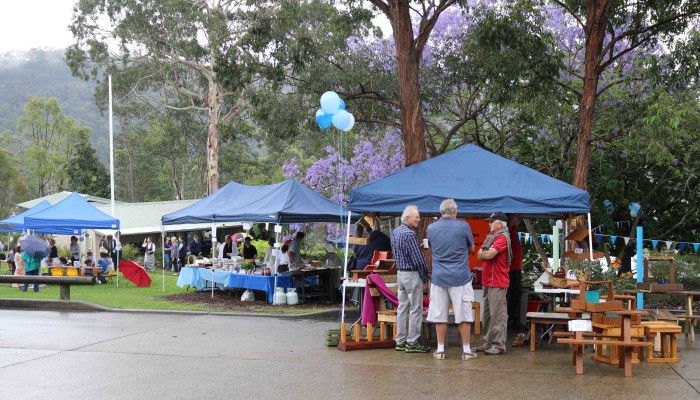
    Hopefully we will be in our very own shed before the end of the year.  Our members are already busy sawing, sanding and turning timbers into items ready for sale at various market stalls, the first being the Easter Markets at the Wisemans Ferry Bowling Club on Easter Saturday, 26th March.

    We have a better idea of what our customers want to buy and we are always trying new ideas, so make sure you come along and check out some of our new items.

    We will also this year be running a few Bunnings BBQ’s to raise some much needed funds to get this shed happening. Mens shed

    The Mens Shed operates each Tuesday from 9.30am to 3.30pm at 2811 River Road, Wisemans Ferry.

    Contact Adrian on 0448833781 or email [email protected] for more information.

    We always welcome new members!!!

    See other News …


  • Dharug & Lower Hawkesbury Historical Society Inc.

    Dharug & Lower Hawkesbury Historical Society Inc.

    Dharug & Lower Hawkesbury Historical Society

    The Dharug & Lower Hawkesbury Historical Society Inc was formed back in 1983 and are located on Wisemans Ferry Road, Gunderman, between Wisemans Ferry and Spencer.

    The premises include a State heritage listed, historic, stone chapel completed in 1855 where meetings and functions of the Society take place.

    Historical Society Historical Society

    The major aim of the Society is the research, collection, presentation and preservation of the history of Wiseman’s Ferry and surrounding areas following initial settlement and the on-going involvement and support of the local community in such tasks.

    A secondary undertaking of the society is the preservation of the former Wesleyan Chapel at Gunderman to ensure its availability to members of the public and for historic research for future generations.
    Membership: Annual membership is available for $25 per household (max 2 adults). Please contact [email protected] for a membership form.

    Venue: The Chapel is an ideal venue for small weddings, naming ceremonies, memorial services and other occasions. For more details please email [email protected]

    Boutique B&B accommodation is available next door at The Missions 1937 – www.themissions1937.com.au

    Meetings: The Society meets on the last Saturday of every second month (March, May, July, September, November). Historical Society 

    Past speakers have included Kate Grenville, author of The Secret River, on her research on Solomon Wiseman for her book; Keith Vincent Smith, biographer of Bungaree and author of Mari Nawi:

    Aboriginal Odysseys which reveals and celebrates the significant role that Aborigines played in Australia’s early maritime history, Elizabeth Roberts, Historian, on the history of the Great North Road; Jeremy Steele who has made an extensive study of Aboriginal languages.

    Dr Geoff Ford, Local Historian, on the Hawkesbury’s forgotten tribes; Les Dollin on the history of the mills on the Hawkesbury and their importance to the survival of the early Colony; and Jean Purtell, author of Hawkesbury River Boats and People. Most recently cultural historian, Warren Fahey, helped the Society celebrate the 160th anniversary of the Chapel.

    Excursions are arranged on alternate months and have included the now world heritage-listed Convict Trail, Finch’s Line, the original crossing location of Wisemans Ferry, Half Moon Farm, Cockatoo Island and visits to the sites of local aboriginal rock art and engravings.

    If you would like to host a tour or speak at a meeting please email [email protected]

    Research: The Society maintains a small archive and library which is available for researching the history of the area as well as local family history. If you would like to contact our archivist, please email [email protected]

    Mangrove Creek Walking Tracks: To receive your free copy of Mangrove Creek Walking Tracks with maps and notes on the history of the area please email [email protected]

    Visiting Groups Welcome: We can host groups at the Chapel. A talk about the history and/or an excursion to the nearby historic sites are options for visitors. To book a tour please contact us at [email protected]

    How to Find Us: From Wisemans Ferry cross the Hawkesbury and turn right. The Chapel is on the right approximately 8 kilometres.
    From Gosford to through Mangrove Mountain and Spencer. The Chapel is approximately 18 kilometers from Spencer on the left.

    Contact: [email protected]

    See other News … Historical Society

    Historical Society

  • St. Albans Writers Festival

    St. Albans Writers Festival

    St. Albans Writers’ Festival

    AUSTRALIA’S INTIMATE Writers Festival 2016 EVENT starts 16th September ….St Albans Writers Festival is a Australian literary festival celebrating writers, books and writing of all styles, genres and forms, based in the small and picturesque village of St Albans.


    The landscape of the Hawkesbury with its diverse population of farmers, artists, writers, tree-changers and weekenders provides a unique and stimulating setting to meet writers, discuss books and debate ideas.

    This intimate festival – places are limited to about 350 – happens over two days and two evenings, starting on Friday 16th September 2016 with drinks and nibbles at the Festival Centre.

    We’ll keep you informed when writers come on board, and of course when tickets are available. We are always interested to hear your thoughts, so if you want to contact us please email us at: enquiries@stalbanswritersfestival.com.au

    The St Albans Writers’ Festival is an incorporated organisation run by volunteers who love St Albans and spend as much time there as they can.

    Contact Details: 1515 St. Albans Road, St. Central Macdonald NSW 2775

    Jonathan Nolan 0419 732 033

    See other news…

    Writers Festival

  • The “Diggers” from the valley…

    The “Diggers” from the valley…

    Many of you would be aware that Wayne Moore has been the driving force behind the Wisemans Ferry Anzac happenings in our Valley… from a website, facebook page, news, updates and most importantly the new Memorial for the commemorative 100 years celebrated last Anzac Day, 2015.

    It’s nearly Anzac Day and I thought it would be appropriate to refresh our memories of exactly what our old towns folk sacrificed when enlisting and serving during the “Great War”..

    Visit http://wisemansferryanzacs.org.au for lots more information…. Below is from the section especially put together for those who enlisted from the Macdonald Valley for service during the Great War of 1914/18.

    Attached is a short bio surrounding their death or injury

    The “Diggers” from this Valley made up over half of the Wisemans Ferry and District contingent.

    7458 Frederick J. CROSS. Enlisted March 1917, age 42. Embarked for Active Service, June 1917. Assigned to 2nd. Infantry Battalion, returned to Australia June 1918.

    1215 John E. KEY. Enlisted January 1916, age 21. Embarked for Active Service, August 1916. Assigned to “Imperial Camel Corps”. (Light Horse) “Wounded in Action”, April 1917 during the 2nd. Battle of Gaza. Returned to Australia March 1919.

    2nd. Battle of Gaza comprising British , Australian and New Zealand troops of the Desert Column commenced at daybreak on 19th. April 1917. The Camel Corps dismounting about 2.5 miles from the Turks front line advanced on Gaza alongside troops of the 3rd. and 4th.

    Australian Light Horse, however, enfilading fire from Turkish rifles and machine guns took a heavy toll on the Australians. The Camel Corps in particular suffering heavy casualties with Tpr. Key suffering a gunshot wound to the right forearm.

    Key recovered from wounds and remained in Egypt’s Western Desert transferring to the 6th. Light Horse Regt. following the disbanding of the Camel Corps in June 1918. John KEY died in 1957, age 62.

    5358 Percy A. CROSS. Enlisted January 1916, age 26. Embarked for Active Service, April 1916. Assigned to 4th. Infantry Battalion. Invalided to Australia, April 1917.

    149 William D. LINCOLN. Enlisted August 1914, age 25. Embarked for Active Service, October 1914. Assigned to 55th. Infantry Battalion. “Wounded in Action” September 1916. Returned to Australia August 1917. Re-enlisted October 1917.

    On the evening of 30th. September 1916 around the Village of “Sailly” a patrol from the 55th. Batt. was sent out to inspect enemy fortifications and wire barracades for the purpose of conducting a dawn raid.

    On the night of the 30th. the patrol encounted enemy fire resulting in two Australians killed and six wounded, of the wounded, Corporal Lincoln received a gunshot wound to the left forearm. On the 5th.

    October he was transferred to the “Queen Mary Military Hospital” in England where his wound was regarded as severe. Returned to Australia and discharged in August 1917. Re-Enlisted October 1917, Embarked for Active Service February 1918.

    5460 Arthur HEARNE. Enlisted January 1916, age 22. Embarked for Active Service, August 1916. Assigned to 20th. Infantry Battalion. “Wounded in Action”, April 1918. Returned to Australia, September 1918.

    Hearne,(recently promoted to Sergeant) along with the 20th. Battalion was rushed to the area known as “Hangard Wood” in an attempt to halt the advancing German Army during the “Spring Offensive”.  

     The morning of April 7th. 1918, the men of the 20th. were faced with a 400 yard advancement over open ground between them and the German Army. The 20th. Batt. along with their sister unit (19th. Batt) suffered heavy casualties during the advance on the German position that morning with Sgt.

    Hearne receiving a gunshot wound to the left forearm. He was evacuated from the field later that day and admitted to the “Colchester” Military Hospital in England three days later.

    1152 Robert PEISLEY. (Son of St. Albans resident, Dr. George Peisley) Enlisted January 1916, age 23. Embarked for Active Service, July 1916. Assigned to “Imperial Camel Corps” (Light Horse). Returned to Australia, August 1918.

    The Imperial Camel Corps (ICC) was formed from surplus Light Horse volunteers in Egypt’s Western Desert during January 1916 in order to deal with Egypt’s pro-Turkey Senussi Tribesmen.  

    The men of the ICC had a rough reputation, mainly because when the Corps was originally formed, Light Horse commanders had seized upon the opportunity to offload some of their more difficult and shady characters although the two closely knit units continued to work side by side until the ICC was disband in June 1918. (AWM).

    Robert Peisley died in 1951 age 58.

    870 Cyril C. JURD. Enlisted January 1915, age 20. Embarked for Active Service, April 1915. Assigned to 7th. Light Horse Regiment. “Wounded in Action” Lone Pine, Gallipoli, August 1915. Returned to Australia, November 1915.

    Gallipoli, 24th. August 1915. As enemy bomb throwing increased along the 7th. Light Horse trench system, men were detailed to be ready with old blankets and partly filled sandbags to smother any Turk bombs landing in their trenches before they burst. The opposing trenches around the 7th. L.H. position were as close as 12 yards.  

     It was on this day that Trooper Jurd suffered a bomb blast to the face, it wasn’t until the 27th. he was able to be evacuated from ANZAC Cove to the awaiting Hospital Ship “Formosa”.

    127 Owen P. JURD.

    127. Sgt. O Jurd. Cairo 1915.W.I.A. Gallipoli

    127. Sgt. O Jurd. Cairo 1915.W.I.A. Gallipoli

    Enlisted September 1914, age 28. Owen Jurd embarked for Active Service, February 1915. Assigned to 8th. Light Horse Regiment. “Wounded in Action” Gallipoli, August 1915. Returned to Australia, November 1916.

    The Charge at the “Nek”. At 04.30.am on the 7th. August, Lance/Corporal Jurd along with the men of the 8th. and 10th. Light Horse Regiments were given the order to charge the Turkish trenches across the narrow plateau on “Russells Top” named the “Nek”.

    In two separate waves the men of 8th. L.H. sprang up and charged the Turkish trenches but as the Turks commenced to throw bombs and under the intense rifle and machine gun fire they were cut down in swathes. The men of the 10th. L.H. suffered the same fate.

    L/Cpl Jurd later recalled the previous suicidal attack some weeks earlier by the Turks, “then it came to our turn to attack on the same spot”. L/Cpl. Jurd went on to say “I did not get far before a piece of bomb caught me in the hip and brought me down.

    I managed to crawl back with my hands under heavy rifle and machine gun fire, I was later carried to the Hospital Boat by stretcher bearer”.

    1626 Alexander POLLOCK. Enlisted April 1915, age 19. Embarked for Active Service, May 1915. Assigned to 17th. Infantry Battalion. “Wounded in Action” June 1918. Returned to Australia, November 1918.

    Every Battalion had it’s “Colourful Larrikin”, this teenage drifter (prior to enlisting) worked as a trainee farmer for the Wilson family of “Avoca” & “Riversvale” St. Albans Road, Macdonald Valley.

    …… with 5 AWOL’s under his belt, he again rejoined his Battalion in France where they were involved in the “mop-up” stages of the German “Spring Offensive”.

    During the advance by the 17th. to halt the German Army, Private Pollock, on the 8th. June 1918 whilst on a cable laying detachment in support of operations near the village of “Hamel” suffered a gas shell wound to the left arm severely fracturing the Humerus. On this day for Pte. Pollock, “The Great Adventure Was Over”.

    Alexander Pollock returned to Wisemans Ferry after the war to have his well earned name placed on the district “Nominal Roll” board…..

    2017 Samuel WILSON. Enlisted January 1916, age 24. Embarked for Active Service, May 1916. Assigned to 57th. Infantry Battalion. “Wounded in Action” September 1917. Returned to Australia, February 1920.

    Late in 1917 as activities moved to Belgium, the 57th. Batt. became heavily involved in the assault on the German stronghold at Polygon Wood, during the advance by the Battalion on September 25th. Pte. Wilson received a gunshot wound to the face.

    He was evacuated to the 56th. General Hospital in France but due to the extent of his injuries he was later evacuated to England where he remained hospitalised for the following seven months.

    720 George R. FLEMING. Enlisted August 1914, age 24. Embarked for Active Service, October 1914. Assigned to 3rd. Infantry Battalion. “Wounded in Action” 19th. May 1915. “Died of Wounds” 28th. May 1915. Buried, Malta.

    “The Turkish Offensive” Shortly after 03:00.am on the morning of May 19th. 42,000 Turkish soldiers made an all out bid to drive the 17,000 ANZAC’s back into the sea.

    The Turks suffered 10,000 casualties inc. 3,000 killed, the ANZAC’s lost 160 killed plus 470 wounded in the carnage which lasted until the 24th. A truce was arranged at 07.00.am on the morning of the 24th.

    owing to the foul stench from the rotting corpses.  The well documented “May 24th. Ceasefire” arranged by the Turkish“Red Crescent” and the allied “Red Cross” lasted about 10 hours in which Australian and Turkish soldiers alike exchanged cigarettes and badges as the dead and wounded were carried from the battlefield.

    Of the 470 wounded, Private Fleming was evacuated from “No Mans Land” suffering a wound to the head and arm, he also had his left thumb severed in the battle.

    Pte. Flemings fate was verified by his mate, Pte Arthur Bone, an English migrant Fleming had met on enlistment. Pte. Bone stated on official records that Fleming was “badly wounded in the head probably about 19th. May” which would indicate that Fleming lay wounded for up to five days before evacuation.

    Records state that he was admitted to hospital on the 24th. May where his leg was later amputated due to wounds. Pte. Fleming died of wounds four days later and was buried at Malta Military Cemetery.

    46327 Amos T. ROSE. Enlisted April 1916, age 31. Assigned to “The Newcastle Depot Training Battalion”. Died of Illness. Newcastle Hospital, 13th. August 1916.

    6086 Valentine M. STARKEY.

    6086. Valentine Starkey. K.I.A. France 1917

    6086. Valentine Starkey. K.I.A. France 1917

    Enlisted January 1916, age 21. Pte. Starkey embarked for Active Service, August 1916. Assigned to 4th.Infantry Battalion. “Killed in Action” May 1917. “No Known Grave”.

    As the 4th. Battalion was participating in operations following the German withdrawal back to the Hindenburg Line, the Battalion came under heavy bombardment from retreating German artillery around the village of Lagnicourt taking the life of Pte. Starkey, 8th. May 1917.  

    Pte. Starkey’s known remains were never recovered from the battlefield.                                              

    32005 Darcy Lyle FERNANCE.

    32005. Darcy Fernance. K.I.A. Belgium 1917.

    32005. Darcy Fernance. K.I.A. Belgium 1917.

    Born and raised at St. Albans  NSW, Darcy enlisted in the A.I.F. October 1916 age 20,  naming his father James Fernance as Next of Kin.  On arrival in France, he was assigned to the 10th. Battery, 4th. Field Artillery Brigade as No. 32005 Gunner Fernance.

    As operations moved to Belgium, the 4th. F.A.B. became heavily involved in support of Allied forces during the 3rd. Battle of Ypres, (31st. July-10th. Nov. 1917). It was on 29th. September 1917 during activities at “Polygon Wood” that Gunner Fernance was fatally wounded by a shell from German Artillery.

     It was during this battle (four days earlier) that fellow Wisemans Ferry compatriot Samuel Wilson suffered severe facial wounds.
    Gunner Fernance’s body was recovered from the battlefield and taken by stretcher to the Casualty Clearing Station.

    He was buried at Reningheist Military Cemetery, Belgium.

    6947. Albert Lyall BAILEY.

    6947. Albert Bailey. K.I.A. France 1917.

    6947. Albert Bailey. K.I.A. France 1917.

    Born and raised at St. Albans NSW, Albert enlisted in the A.I.F. October 1916, age 23, naming his father Albert Bailey (snr) as Next of Kin.  Arriving in France as a reinforcement, Albert was assigned to the 15th. Infantry Battalion.

    Following the occupation of “Messines Ridge” in June 1917 by the Battalion, the men of the 15th. were temporarily relieved from the front. On the 9th./10th. July, 450 men were called on to assist the engineers in carrying out general support duties.

    It was on the 10th. July whilst carrying out repairs to the 15th’s support trench system, the men were fired upon by German Artillery and small arms fire.

    Pte. Bailey receiving a severe head wound died from loss of blood at the 2nd. Casualty Clearing Station after being evacuated from the front by stretcher bearer.

    There are few communities across Australia that was not touched by World War One.

    In 1914 the whole male population of some small communities signed up to defend “King and Country”.

    Sadly, over 60.000 did not return. Over 18,000 have “NO KNOWN GRAVE”.

    Of those, 7,000 were recovered but not identified. The Unknown Soldier. “KNOWN UNTO GOD”.

    See Other News…

    Diggers, Diggers, Diggers, Diggers, Diggers, Diggers Diggers Diggers Diggers Diggers Diggers Diggers Diggers Diggers Diggers Diggers Diggers Diggers Diggers Diggers Diggers Diggers Diggers Diggers Diggers Diggers Diggers DiggersDiggers Diggers Diggers Diggers Diggers Diggers

  • Historical Talk – The Myall Creek Massacre Trial

    Historical Talk – The Myall Creek Massacre Trial

    DHARUG AND LOWER HAWKESBURY HISTORICAL SOCIETY – UPCOMING EVENT 
    An historical talk Next month the DLHHS will be hosting the author, Mark Tedeschi AM QC, who will talk on his research into the trial of the men brought to justice for the 1838 massacre of 28 Aboriginal men, women and children at Myall Creek.

    Apart from Mr Tedeschi’s prominence as the Senior Crown Prosecutor of New South Wales, to date Mark has published two true-crime books, Eugenia: a true story of adversity, tragedy, crime and revenge and Kidnapped: the crime that shocked the nation.

    Mr Tedeschi’s soon to be published book on the massacre, Murder at Myall Creek, is based on Mark’s research into this crime and his deep, professional understanding of the colonial justice system within which some of the perpetrators were successfully prosecuted.

    The focus of Mr Tedeschi’s talk is the role of the prosecutor in that case, John Hubert Plunkett. Although Plunkett’s position as Attorney General of NSW in the first half of the nineteenth century may not be well known to everyone, he can rightly be called “the Martin Luther King of colonial Australia” for his vision of a fair and unprejudiced criminal law system for Aboriginal people in New South Wales.

    Speaker: Mark Tedeschi AM QC

    Topic: John Hubert Plunkett and the Myall Creek Massacre Trial

    Date: Saturday 28 May 2016

    Time: 1:15pm for 1:30pm

    Location: The Lower Hawkesbury Wesleyan Chapel, 6445 Wisemans Ferry Road, Gunderman.

    High Tea will be served after the talk, and there will be an opportunity to speak with Mark and purchase either of his two published books.

    Cost: $10 for society members, $15 for non-members.

    RSVP essential before 21 May 2016 at: [email protected] or, from 1 May until 21 May on 0413929881

    Below you’ll find some further reading relating to this topic – for the full story visit:    http://www.insidehistory.com.au/2015/08/the-myall-creek-massacre-the-trial-and-aftermath/

    In issue 23 of Inside History, we explored the aftermath the Myall Creek massacre – one of the most harrowing episodes of Australian history, in which up to 28 Aboriginal men, women and children were murdered.

    Here, Mark Tedeschi AM QC, the Senior Crown Prosecutor for New South Wales, looks at the trials that followed the massacre, in an extract from the second part of this series. (For an extract of part one, click here.)

    In early September 1838, as news spread around New South Wales of the Myall Creek massacre and the arrest of 11 suspects by Police Magistrate Edward Denny Day, colonial society was split.

    A clear majority took the position that the Aborigines were “lawless savages” who needed to be driven off the land so that the colony could continue to expand unhindered.

    The issue provided a rare focus of unity between free settlers and convicts. Only a small minority considered that this was an opportunity to achieve justice for the victims of a terrible crime and to establish the rights of Aboriginal inhabitants to live without the threat of annihilation.

    Meanwhile, the ringleader of the massacre, John Henry Fleming, continued to evade Magistrate Day’s searches for him.

    The prominent Sydney Herald strongly supported the prisoners, advancing views that were widely held in the community at the time:

    We want neither the classic nor the romantic savage here. We have far too many of the murderous wretches about us already. 

    The whole gang of black animals are not worth the money the colonists will have to pay for printing the silly court documents on which we have already wasted too much time.

    *
    On 15 November 1838, the 11 men who had been rounded up and charged by Magistrate Day stood trial in the Supreme Court of New South Wales before the Chief Justice, Sir James Dowling, and a civil jury of 12 freemen.

    The case was prosecuted for the Crown by none other than the Attorney General, John Hubert Plunkett, and his junior Counsel, Roger Therry.

    The prisoners faced two charges: “the wilful murder of one Daddy, an Aboriginal Black native” and the murder of “an Aboriginal Black to the Attorney General unknown”…

    On the second day of the trial, the Chief Justice summed up the case for the jury in an exemplary and balanced manner. He told the jury this:

    It is clear that a most grievous offence has been committed; that the lives of nearly 30 of our fellow creatures have been sacrificed.

    In order to fulfil my duty, I must tell you that the life of a Black is as precious and valuable in the eyes of the law as that of the highest noble in the land…

    The point you have just to determine is whether Daddy was the unfortunate man who lost his life as set forth in the indictment, or whether a man whose name is unknown to the Attorney General came to his death by violent means from the prisoners’ hands.

    Attorney General Plunkett knew the trial had gone well, but he also knew that there was a tremendous amount of discontent in the community at the prosecution.

    Would the jury convict the prisoners — 10 of them white — of the murder of Daddy or of an unknown Aboriginal man? A mere 15 minutes after retiring to consider their verdict, the jury returned to court and announced verdicts of not guilty for all accused.

    Plunkett was appalled. In disgust, he immediately announced that he would be putting the accused on trial for a third murder — this time for the death of an Aboriginal child.

    This was something that would never occur today, where the accused would be charged in the one trial with all the murders arising from the same incident. The Chief Justice remanded all the accused in custody to await a second trial.

    *
    On 29 November 1838 the second trial commenced before Justice Burton.

    An unusually high number of men who had been called for jury service failed to appear, prompting Plunkett to request the judge to fine them severely. There were in fact insufficient numbers to make up a complete jury of 12. This was a good indication of the distaste that many people felt for the case…

    The trial took just a day and a half, after which the jury retired to consider their verdict. They returned one hour later.

    The foreman announced that the verdict was not guilty, however one of the jurors immediately informed the court that the foreman had delivered the wrong verdict and that the correct verdict was guilty. After a suitable enquiry, the judge entered verdicts of guilty.

    The sentencing of the prisoners was delayed until after three Supreme Court judges could
    hear argument to review the main decisions of law that had been made before and during the trial.

    See other news…

    historical, historical, historical, historical, historical, historical, historical, historical